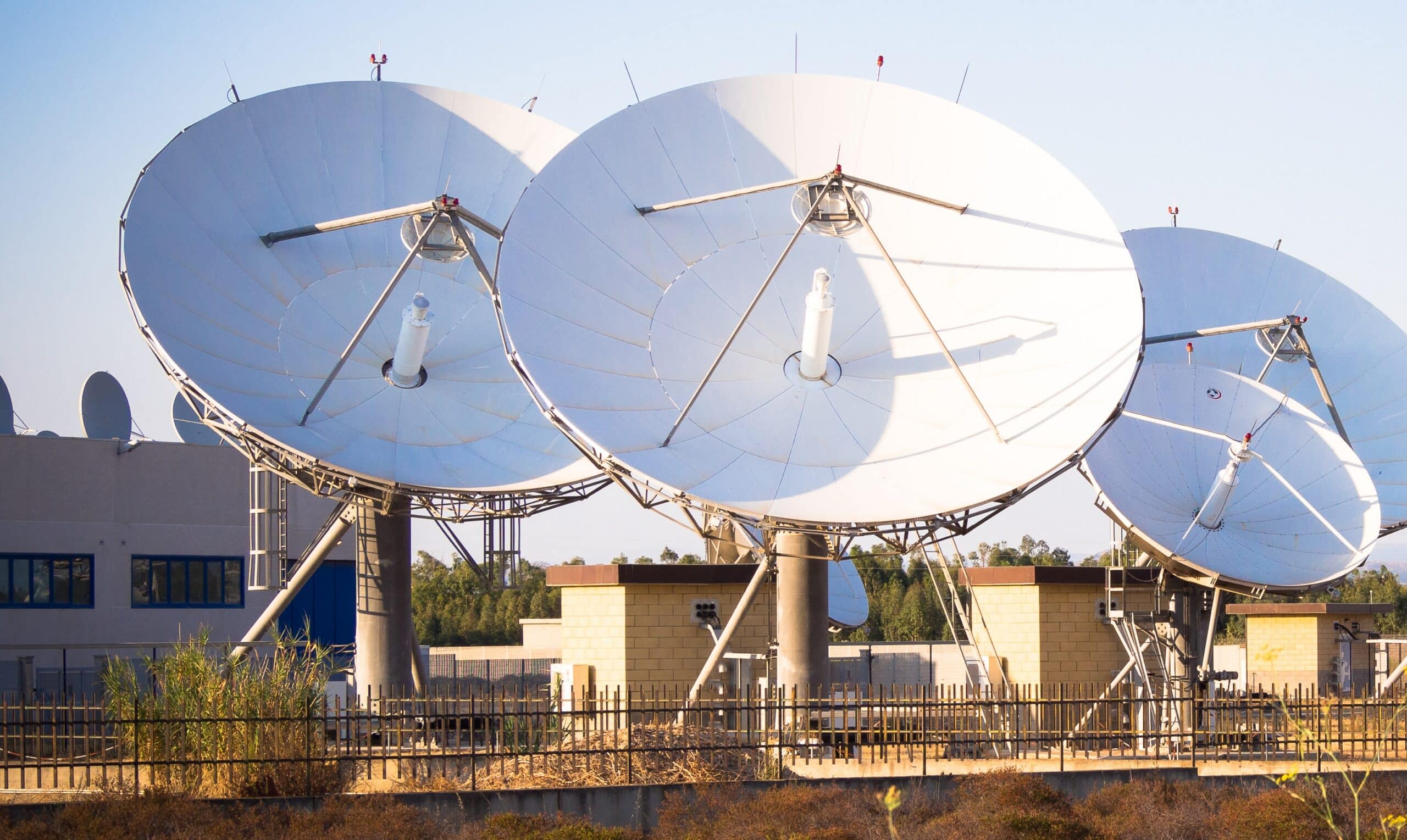
I recently completed my 40th certification after 10 years as a Technical Assessor for the WTA Teleport Certification Programme. Along the way I worked with some amazing teams who have used this excellent program to improve their teleports beyond imagination.
In this article, I share key insights from these audits. I hope these findings will help anyone managing satellite and broadcast infrastructure, as well as customers and investors performing due diligence in this competitive sector.
The WTA Teleport Certification Program evaluates facilities across four tiers, from Tier 1 to the elite Tier 4. Each level is defined by objective standards for infrastructure, technology, capability, operational procedures and service management.
As of early 2026, the standard is growing in popularity with over 70 teleports having achieved certification. For customers of teleport services, the rigorous 220-question checklist serves as a valuable due diligence report, providing a transparent measure of quality and performance before they commit to a provider.
What is most remarkable is that the WTA standards have stood the test of time. They have become the industry’s definitive yardstick for best practice, fostering a culture of continuous improvement. Furthermore, Tier 4 standards are increasingly becoming the industry benchmark, directly influencing global investment and infrastructure decisions.
A teleport’s performance is rarely static: it is either evolving or regressing. This reality makes continuous improvement the bedrock of any resilient business and is the reason every certification includes a targeted roadmap for enhancement.
To maintain their certification, teleports are recertified every 3 years. Over 10 years, I conducted 16 recertifications, providing a unique opportunity to track progress. During these audits, I evaluated whether previous recommendations were acted upon and what self-selected improvements the teleport implemented since the last visit. The data reveals a compelling trend:
This suggests that a culture of continuous improvement is most evident in high-tier facilities. Even the most advanced teleports do not rest on their laurels; they continue to drive progress, proving that excellence is a process of constant refinement rather than a final destination.
It is a common misconception that all improvements require significant capital. Whilst every enhancement demands an investment of time and energy, some do not necessitate financial expenditure. Across 40 teleport certifications, I’ve made a total of 232 recommendations for improvements: notably, 71% of these focused on process, service management and reporting metrics enhancements.
Because these measures typically leverage existing teams or vendors, they require minimal external spend. This means less than 30% of the recommendations involved capital expenditure for system upgrades. This data challenges the notion that continuous improvement is tied to a large budget, proving that smarter processes, partnering and better service management are often more impactful than spending cash.
Teleports operate in highly competitive markets where investment is strictly customer driven. Building a Tier 4 facility is commercially wasteful if the target market only requires Tier 3 infrastructure and resilience. Many Tier 3 teleports recognise this and are content to maintain their status; this does not imply they are substandard. On the contrary, many are leaders in continuous improvement but choose to align their infrastructure with their customers’ specific pricing and investment profiles.
Conversely, some operators strive for Tier 4 status and the prestige it carries. These teleports commit to significant capital expenditure to satisfy a specific customer segment willing to pay a premium for maximum resilience. However, while physical infrastructure requires heavy investment, continuous service improvement does not. Regardless of Tier, there is no reason why every teleport cannot excel at managing its existing assets and optimising its operational processes.
Over the past decade, teleport infrastructure has matured considerably, shifting towards improved redundancy in power, cooling, and transmission systems, alongside a broader adoption of automated fire suppression and cloud virtualisation. This evolution highlights a move towards eliminating single points of failure in electrical distribution systems, adopting in-row cooling, installing automatic fire suppression systems and offering increased connectivity choices, including geographically diverse fibre suppliers.
Some teleports with significant infrastructure, choose to outsource maintenance responsibility to specialist maintenance contractors. On the one hand this can provide better, specialist care, on the other outsourcing risk by transferring it to third parties who, if not well managed, may put teleport resilience at increased risk.
Teleports depend on robust monitoring and control (M&C) systems to manage services and satisfy service level agreements. However, as facilities scale, many fall into a fragmentation trap by accumulating disparate M&C platforms that create unnecessary complexity in the control room. To counter this, advanced teleports are increasingly adopting overarching systems, providing operators with a single, unified view of the entire network. To remain effective, these systems require constant threshold tuning; otherwise, operators suffer alarm fatigue from a deluge of low-priority alerts. Furthermore, industry-leading platforms now offer customers portal access, providing a filtered, real-time view of their specific equipment and service status.
Event logging is equally vital for long-term resilience. Paradoxically, as hardware reliability improves, the decrease in incidents can breed complacency, leaving systems untested and creating a recipe for failure. More advanced teleports mitigate this by using comprehensive logging to capture data across all networks. This enables proactive trend analysis and anomaly detection, allowing teams to investigate irregularities before they escalate into outages. Increasingly, the most advanced operators are integrating artificial intelligence (AI) to automate these reviews, transforming logging from a passive record into a proactive management tool.
Teleport cybersecurity has advanced significantly over the last decade, as “security through obscurity” is no longer a viable strategy. Facilities are increasingly vulnerable due to highly interconnected networks, a reliance on Commercial Off-The-Shelf (COTS) equipment, and an expanding attack surface. This threat was starkly illustrated by the 2022 Viasat attack, which immobilised 40,000 communications terminals at the onset of the Russian invasion of Ukraine.
While more teleports are adopting sophisticated controls and standards like ISO27001, critical operational gaps remain:
A major recurring concern is the imbalance between enterprise IT and operational Technology (OT). Cybersecurity efforts often focus on administrative IT because those tools are more mature, whereas OT networks are constrained by vendor patching policies, protecting legacy equipment and concerns that security measures introduce operational inflexibility. Furthermore, some teleports mistakenly rely on a parent company’s ISO27001 certification while neglecting their own OT environment, hoping for protection via “cybersecurity osmosis”.
The cybersecurity requirements of the WTA certification are demanding but attainable; while few teleports achieve a 100% score, these standards are now essential for modern resilience.
Documenting processes in a runbook is essential for ensuring consistency, facilitating continuous improvement, and streamlining training. For instance, structured incident management ensures that teams know exactly how to escalate issues and coordinate with customers or vendors. Critically, refining processes is often easier and more cost-effective than upgrading physical infrastructure.
As an assessor, service availability records are one of the first metrics I examine. These logs do more than just measure success; they are a primary indicator of improvement opportunities. Teleports achieving “five-nines” service availability (99.999%) increasingly treat event data as a strategic learning tool. By leveraging AI, these operators can identify subtle network performance fluctuations, often a leading indicator of impending hardware failure. Furthermore, most teleports now utilise Root Cause Analysis (RCA), employing techniques such as the “Five Whys” to surface and resolve the underlying drivers of service issues.
Records are a cornerstone of the audit process, yet a common misconception persists that they are maintained solely for the auditor’s benefit. In reality, their primary value lies in information sharing across the organisation. In an AI-driven environment, structured records allow for trend analysis and provide deep insights into performance and latent risks. Moreover, as recording becomes increasingly automated, the administrative burden on employees is reduced. Ultimately, while these records provide the evidence of conformance required for certification, their true power lies in their ability to validate operational results and drive long-term resilience.
Business continuity practices at teleports have improved immensely over the last decade, with operators increasingly adopting “what-if” scenario planning. While the rehearsal of these scenarios has also become more sophisticated, a notable gap remains: many teleports are still reluctant to include vendors or customers in their exercises. Bridging this collaborative divide is a key area for industry growth in the coming years.
Effective business continuity is about focused effort, not boiling the ocean. Successful teleports adopt a risk-based strategy, developing broad, flexible frameworks to address high-impact events rather than creating overly detailed, rigid manuals. In essence, practical tools and templates often outperform complex plans. For example:
The goal of a robust business continuity management approach is not just to recover, but to absorb shocks and return to normal operations with minimal disruption to service availability.
Most customers would prefer to work with teleports that can respond to new requirements with speed and precision. To achieve this, operators must maintain agile processes that balance rapid deployment whilst protecting existing services.
This responsiveness is typically driven by local teams with access to broader corporate expertise. Being part of a larger organisation offers significant advantages, leveraging resources for IT, cybersecurity, health and safety, network engineering, facilities management as well as increased buying power with vendors. The most successful models occur when the parent company provides this strategic support while allowing the teleport to maintain its operational autonomy.
External collaboration is also becoming a strategic necessity. In the era of Low Earth Orbit constellations and high-frequency services (such as Ka, Q and V band), partner teleports are essential for site diversity to mitigate weather-related outages. While some larger operators maintain multiple proprietary sites, many single-site teleports are now embracing industry partnerships.
Higher-tier teleports, in particular, are increasingly open to these collaborations. They recognise that partnering does not mean compromising intellectual property or independence; rather, it provides a cost-effective way to offer multi-site capability and enhanced resilience and network reach without the capital burden of building and maintaining additional physical infrastructure.
Perhaps the most important aspect of teleport performance is leadership. The most progressive teleports are generally led by dynamic leaders who are striving for the best and bring their team with them.These teleports have a strong learning bias and an appetite for improvement that isn’t strictly tied to budget size. They actively seek best practice from other teleports and adjacent industries such as telcos. They forge new relationships with vendors and partners that help them adopt new best practice strategies. They motivate their team with energy, enthusiasm and knowledge.
Effective leaders attract customers with their infectious enthusiasm and determination to provide excellent service.During the audit process, these leaders are proactive; they don’t just passively undergo assessment, they enquire about industry standards and actively seek suggestions for improvement. By the time of their next WTA certification, they have typically addressed most, if not all previous recommendations.
Successful teleports also implement their own improvement plans. This is often in conjunction with adding new customers involving installation of new systems, earth stations and taking on new service obligations.
Such leaders often build up a momentum which attracts new employees and customers creating a virtuous circle of improvement. When these leaders are equally adept at managing senior stakeholders and securing capital, they ensure that their vision for excellence is backed by the necessary funding to thrive in the future.
Finally, a word on the certification dynamic. It is only human nature for teleports new to the process to want to present themselves in the best possible light. However, an audit involves intense interaction, and auditors with decades of industry experience are quick to identify best practices and opportunities for improvement. Transparency is always the most effective strategy; attempting to obscure issues is rarely successful and misses the point of the exercise.
The most successful audits often involve senior management engagement. Introducing the auditor to the leadership team is always welcome, as it enables a broader discussion about WTA certification, business context and recognition of great performance. This high-level support also signals that certification is a strategic priority, which invariably smooths the overall process and ensures recommendations are acted upon.
It is also important to recognise that every element of a WTA assessment mirrors questions asked by sophisticated customers. One of the greatest strengths of certification is that it serves as a due diligence roadmap for procurement. Furthermore, for those involved in mergers or acquisitions, a WTA rating provides buyers with independent reassurance that the facility possesses critical infrastructure, robust procedures, and a genuine culture of continuous improvement.
In conclusion, the WTA certification is a rigorous standard that has stood the test of time and driven a culture of continuous improvement across the industry. The standard recognises excellence, provides guidance and enables a roadmap of improvements to be tailored to teleports’ requirements. In my experience all teleports wholeheartedly engage in the process in a positive and proactive manner.
The most successful teleports not only implement auditor recommendations but also carry out self-selected improvements that drive continuous improvement.
I hope the insights presented in this paper are helpful and teleports continue to engage in the WTA certification program.
Finally, I’d like to offer my congratulations to all the teleports that have achieved WTA Teleport Certification over the last decade. I look forward to seeing even greater levels of excellence and continuous improvement over the next decade!
Sign up to receive updates on how we’re transforming capabilities in broadcast and media